
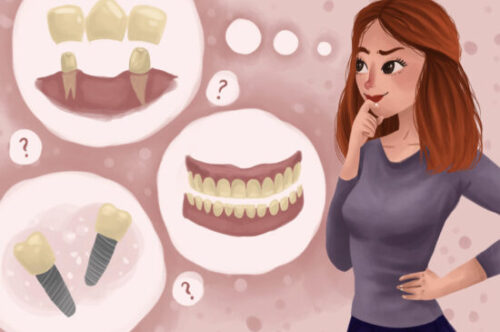
A missing tooth has a way of working itself into everyday life. You may automatically move a steak to the other side of your mouth, avoid smiling from a certain angle, or run your tongue through the same gap without even thinking about it anymore. Then, once you decide you are ready to replace it, you find out there is more than one way to fill the space.
At Fielder Park Dental in Arlington, Dr. Chip Mercer, Dr. William Saunders, Dr. Anuj Patel, and Dr. Josh Turner offer several ways to replace missing teeth, including bridges, dental implants, and dentures. We also use implants in different ways, from replacing one tooth to securing a bridge or an entire arch of teeth. How many teeth are missing, where the gaps are, and what the surrounding teeth and bone look like all help shape the recommendation.
Two people can be missing what looks like the same tooth and still end up with different options. One person may already have large crowns on the teeth beside the gap and do well with a bridge. Another may have untouched neighboring teeth and enough bone for an implant, while someone missing teeth in several areas may do better with a partial denture or an implant-supported option.
A Dental Bridge Uses the Teeth Beside the Gap
A traditional bridge replaces a missing tooth by placing crowns on the teeth on either side of the space and connecting a replacement tooth between them. Once the bridge is cemented in place, it stays in your mouth for eating, talking, brushing, and sleeping. For someone who wants a fixed replacement, that can feel much more natural than taking an appliance in and out.
The teeth beside the gap have a lot to do with whether a bridge is a good fit. If those teeth already have large fillings or crowns, covering them as part of a bridge may work well with what they need anyway. If both neighboring teeth are healthy and untouched, one of our doctors may also talk with you about an implant so those teeth can stay as they are.
Cleaning changes a little once you have a bridge because floss cannot slide straight down between the connected crowns. You will need to clean underneath the replacement tooth and around the crowned teeth at each end. If you are the person who already gets annoyed when a popcorn hull gets caught in one spot, we will show you exactly how to keep food from sitting under the bridge.
A Dental Implant Replaces the Tooth From the Root Up
A dental implant starts below the gumline. A titanium implant is placed in the jawbone where the missing tooth root used to be, and after the area heals, a crown is attached above it. For a single missing tooth, that lets us replace the space without using the neighboring teeth to hold the restoration.
At Fielder Park Dental, we use 3-D imaging when planning implant treatment so our doctors can see the jawbone, nearby structures, and the amount of space available before placement. In the back of the mouth, bone height, nerves, and the sinus can affect where an implant can go. We also provide bone grafting and sinus lifts when an area needs more bone first.
The timeline is longer than a bridge because the implant needs time to heal and integrate with the bone before the final tooth is attached. Many patients still like the idea of having a replacement that stands on its own and stays in place. If you have spent months automatically chewing around the gap, it can be a relief to stop thinking about which side of your mouth does most of the chewing.
Our doctors also have strong backgrounds in implant dentistry. Dr. Mercer is a member of the International Congress of Oral Implantologists, Dr. Saunders belongs to the American Academy of Implant Dentistry, and Dr. Patel’s comprehensive dental background includes implant treatment. That experience gives our team several ways to approach both straightforward and more involved cases.
Dentures Can Replace Several Teeth at Once
When teeth are missing in several places, replacing every space with an individual bridge may not be the best route. A removable partial denture can fill multiple gaps at the same time while fitting around the natural teeth that remain. If an entire upper or lower arch is missing, a full denture can replace all of those teeth together.
Partial dentures come in and out for cleaning, and they can take some adjustment at first. You may notice the appliance with your tongue, need a little practice with certain foods, or find yourself reading out loud at home while your speech settles in. As the mouth gets used to the new shape, those early awkward moments usually fade.
A removable denture may work well when several teeth are missing or when the remaining teeth are not in a good position to hold a bridge. Our doctors look at where the teeth are missing, which natural teeth are healthy enough to keep, and how the appliance will sit when you bite. From there, we can show you what a partial or full denture would involve.
Implants Can Also Support Bridges and Dentures
Implants are not limited to replacing one tooth at a time. At Fielder Park Dental, we also use implants to support bridges and dentures when several teeth or an entire arch are missing. That gives us options between a traditional removable denture and placing an individual implant for every missing tooth.
An implant-supported bridge can replace several teeth in a row without depending on natural teeth at both ends. Implant-secured dentures use implants to give the appliance more stability, which can reduce the shifting that some people experience with a conventional denture. For patients missing a full arch, we also offer All-on-4 treatment using four implants to support a fixed row of replacement teeth.
For someone who has spent years using denture adhesive or avoiding corn on the cob because the lower denture moves, extra stability can make a big difference. Maybe you have gotten used to pressing the denture back into place with your tongue halfway through a meal or choosing softer foods when you are out with friends. Implant-supported treatment can reduce some of those frustrations when the bone and overall oral health support it.
Our 3-D imaging helps us see what the jaw can support before we recommend a specific approach. Bone volume, medical history, and the location of the missing teeth all come into play. That lets us plan around the mouth you have now rather than forcing one type of replacement to fit every situation.
The Teeth Beside the Gap Can Steer the Decision
Imagine you are missing one lower molar. If the teeth on either side are strong, healthy, and have never needed crowns, an implant may let us leave those teeth alone. If both already have large restorations and would benefit from crowns, a bridge may fit the situation better.
We also look at what is happening in the rest of the mouth. Gum disease, cracked teeth, extensive decay, or a loose tooth near the gap may need attention before we build a new restoration beside it. Dr. Mercer, Dr. Saunders, Dr. Patel, or Dr. Turner will look at the whole area because the new tooth has to work with the teeth that are staying.
The way your teeth come together also affects the design. Someone who clenches heavily, has significant wear, or puts most of their chewing force on one side may need a different approach from someone with a more even bite. If you have spent years chewing almost everything on one side because the other side feels weak or awkward, that is something we can often see in the wear pattern.
A Gap That Has Been There for Years Can Look Different Underneath
If a tooth was removed years ago, you may barely think about the gap anymore. You may have learned exactly which side handles crusty bread, nuts, or tougher meat and stopped noticing that you are doing it. Under the gums, though, the jawbone in that area may have slowly shrunk because there is no longer a tooth root there.
Nearby teeth can also lean toward the open space, and the tooth directly above or below it may begin moving into it. In some implant cases, a bone graft can rebuild an area that no longer has enough volume for straightforward placement. In other cases, the space between the neighboring teeth may have changed enough that we need to plan around the bite you have now.
A long-standing gap can also leave less room for the new tooth than you might expect. That is why we measure the space and look carefully at how the upper and lower teeth come together. The replacement has to fit the mouth you have today, not the way things looked years ago when the tooth was first lost.
Think About What You Want Daily Life to Feel Like
The way you want to live with the replacement is worth thinking about alongside the dental details. Some patients strongly prefer something fixed because they know they will dislike removing an appliance every night. Others are comfortable with a removable partial and would rather avoid implant surgery or a longer healing period.
Cleaning is different with each option too. A bridge requires floss or another tool beneath the replacement tooth, while an implant needs careful brushing and cleaning around the gumline. Dentures come out for cleaning and need regular care both inside and outside the mouth.
Your everyday habits may make one option feel easier than another. Maybe you eat lunch in the car between appointments and do not want to deal with removing a partial afterward, or maybe you already wear a removable appliance and cleaning it does not bother you at all. Someone who has struggled with food getting under a loose denture may care most about stability, while someone else may care more about keeping treatment shorter.
Comparing Cost and Treatment Time
Bridges, implants, and dentures come with different upfront costs, and insurance benefits can vary considerably between them. After your exam, our team can give you a treatment estimate based on what your mouth actually needs rather than a broad online price range. We can also review insurance benefits, payment options, and financing if needed.
It helps to look at what each treatment includes. An implant may involve the implant itself, healing, and the final restoration, while a bridge includes crowns on multiple teeth. A denture has its own fitting process and may need adjustments as your mouth gets used to it.
For many patients, several things end up shaping the final decision at once. Treatment time, maintenance, how fixed or removable the replacement feels, and cost all come into play. We can go through each option with you and answer questions as you compare them.
Tooth Replacement at Fielder Park Dental in Arlington, TX
A missing tooth can look like a simple empty space, but the best way to replace it depends on what is happening around that space. Healthy neighboring teeth, older crowns, bone loss, several missing teeth, or a denture that moves can all lead us in different directions. Because Fielder Park Dental offers bridges, implants, dentures, bone grafting, implant-supported restorations, and 3-D imaging, our doctors can look at several ways to rebuild the area.
Dr. Chip Mercer, Dr. William Saunders, Dr. Anuj Patel, and Dr. Josh Turner bring broad restorative and implant experience to Fielder Park Dental. Whether you are replacing one missing molar or trying to find a more stable solution for an entire arch, our team can look at the teeth, bone, bite, and existing dental work together before recommending treatment.
If you have been chewing around a gap for months or years, schedule a visit with Fielder Park Dental in Arlington. Maybe you are tired of sending every crunchy bite to the same side, pressing a denture back into place with your tongue, or noticing the same space every time someone takes a picture. We can show you what the area looks like now and help you find a replacement that feels easier to live with every day.
Image from Authority Dental under CC 2.0