
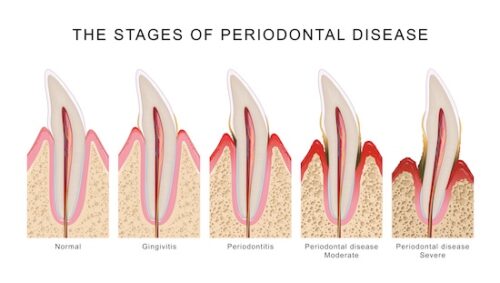
Gum disease does not usually start with dramatic pain. It often begins quietly — slight bleeding when brushing, mild swelling, or gums that appear more red than pink.
Over time, those small changes can progress. At Fielder Park Dental in Arlington, TX, our team monitors gum health at every exam. Understanding the stages of gum disease can help you recognize early signs and seek treatment before the condition becomes more serious.
Stage 1: Gingivitis
Gingivitis is the earliest stage of gum disease — and the only stage that is fully reversible.
At this point, plaque has built up along the gumline, causing inflammation. Common signs include:
- Gums that bleed when brushing or flossing
- Redness or puffiness
- Mild tenderness
- Persistent bad breath
The bone supporting the teeth remains intact during gingivitis. With professional cleaning and improved home care, inflammation can typically be resolved.
Because gingivitis rarely causes pain, it is often overlooked. Routine exams help detect it early.
Stage 2: Early Periodontitis
If gingivitis is not treated, inflammation can begin affecting the bone and connective tissue that support the teeth. This is known as early periodontitis.
Your dentist measures gum “pockets,” the spaces between teeth and gums. Healthy pockets measure 1–3 millimeters. When they deepen to 4 millimeters or more and show bone changes on X-rays, progression has begun.
Signs may include:
- Increased bleeding
- Gums pulling slightly away from teeth
- Mild bone loss on imaging
Bone loss cannot be reversed, but early treatment can help stabilize the condition.
Stage 3: Moderate Periodontitis
As gum disease advances, pockets deepen further — typically 5–6 millimeters. Bone and connective tissue continue to weaken.
Symptoms may include:
- Noticeable gum recession
- Teeth that feel slightly loose
- Increased sensitivity
- Occasional discomfort when chewing
Professional periodontal treatment, such as scaling and root planing (deep cleaning), is usually recommended at this stage to remove bacteria beneath the gumline and reduce pocket depth.
Stage 4: Advanced Periodontitis
In advanced periodontitis, pocket depths often measure 7 millimeters or more. Significant bone loss has occurred.
Patients may notice:
- Teeth shifting or feeling unstable
- Changes in bite alignment
- Persistent bad breath
- Gum abscesses or swelling
With reduced structural support, teeth are at greater risk of mobility or loss without treatment.
Why Early Care Matters
The key difference between stages is the amount of support around the teeth.
- In gingivitis, inflammation is limited to the gums.
- In periodontitis, bone begins to break down.
- In advanced stages, structural stability is compromised.
When gum disease is caught early, treatment is more conservative. Once bone loss occurs, care focuses on controlling progression rather than reversing damage.
Chronic gum inflammation has also been associated with systemic conditions such as diabetes and heart disease. Managing periodontal health supports overall wellness.
How Gum Disease Is Treated
Gingivitis: Gingivitis Cleaning
If diagnosed early, a gingivitis cleaning may be recommended. This cleaning extends slightly below the gumline to remove plaque and tartar contributing to inflammation.
Because there is no bone loss at this stage, gingivitis can often be reversed with professional care and improved daily hygiene.
Early to Moderate Periodontitis: Deep Cleaning
When bone loss is present and pocket depths reach 5 millimeters or more, scaling and root planing is typically advised. This deep cleaning removes hardened buildup from beneath the gums and smooths root surfaces to help tissues reattach.
After treatment, patients often transition to periodontal maintenance visits every three to four months for closer monitoring.
Advanced Periodontitis: Ongoing Care or Referral
In more advanced cases, additional therapy may be necessary. Some patients continue periodontal maintenance in-office, while others benefit from referral to a periodontist for specialized treatment.
The goal at every stage is to stabilize the disease, preserve natural teeth, and prevent further progression.
Gum Disease Treatment in Arlington, TX
If you have noticed bleeding gums, gum recession, or changes in how your teeth feel, schedule an evaluation at Fielder Park Dental in Arlington, TX. Our team assesses pocket depths, bone levels, and inflammation to determine the stage of gum disease and recommend appropriate treatment. Early care can protect your teeth and support long-term periodontal health.